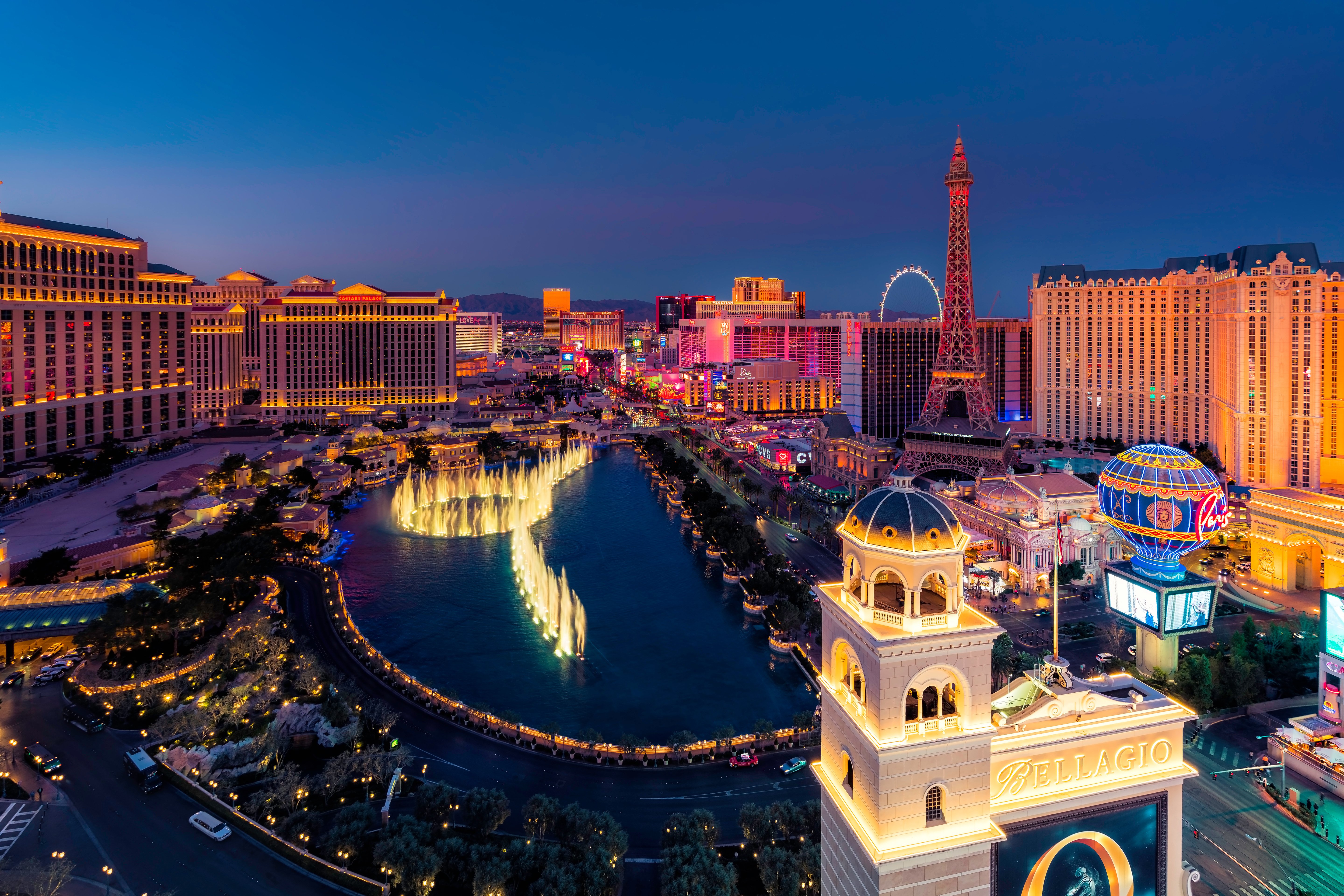
A few weeks ago I was looking at Las Vegas hotel rates and was surprised by what I saw. Las Vegas tourism declined in 2025, with visitation down 7.5% fueling concerns that Vegas had become too expensive. I expected everything to feel expensive. That's been the story for a while now. Vegas got pricey. People noticed.
But when I actually pulled up rates, that's not what I found. Some properties had lower rates than I expected. There were promotions, lots of discounts (especially for locals), and the occasional price that was so low it genuinely surprised me. And yet it didn't feel like a deal. It felt off.
That feeling stayed with me, because it turns out it matches what's actually happening in the market.
2025 Las Vegas Tourism Decline Numbers
The 2025 numbers are pretty stark. The 2025 collapse of visitation to Las Vegas worked out to about 3.1 million fewer people coming through the city last year. December RevPAR was down nearly 12% compared to the same month the year before. Harry Reid International saw a 6% drop in passenger traffic for the full year, and 10% in December alone, which is typically one of the busier travel months. Canadian carriers in particular have cut Las Vegas capacity by 30%, and U.S. carriers are offering 7% fewer seats for the first quarter of 2026.
At the same time, gaming revenue ticked up about 1%. Spend per visitor rose. Entertainment attendance was held. Caesars reported a 20% drop in profit, while MGM's consolidated revenues were actually up 2% for the full year, even as its Las Vegas segment declined quarter by quarter. So, this isn't a collapse by any means. It's a shift, and the shape of the shift matters more than the headline numbers.
The most consequential piece isn't the overall drop in volume, but who has stopped coming. Canadian visitors have historically been among the highest-value international guests Las Vegas attracts, but their visitation declined somewhere between 20 and 50 percent, depending on the time period you're looking at in 2025.
These are guests who typically stayed longer and spent more across the property and losing them isn't the same as losing a drive-in weekend visitor who only books Sunday night and drives home Monday morning.
On top of that, operators are carrying higher costs in a softer demand environment. Labor is up. Food and beverage costs are up. Capital projects are ongoing. MGM's Las Vegas margins compressed even while the company invested $300 million in remodeling the MGM Grand's rooms. You can't easily raise prices to offset those costs when demand is more price-sensitive than it was a year ago, but discounting carries its own risk, and it's one the industry is starting to talk about more honestly.
Bill Hornbuckle, MGM's CEO, put it plainly during a 2025 earnings call: "We lost control of the narrative over the summer." That line is worth sitting with.
The Real Problem: Perception vs Pricing
What is happening in Las Vegas right now isn't purely a pricing problem. It's a perception problem. Look at it this way: if you see a hotel room advertised for $29, your brain immediately starts doing math about what the whole trip will cost. But when you arrive, and coffee is $12, breakfast is $36 a plate, and you’ve paid $49 in resort fees, the room doesn’t feel like a great deal anymore. It feels like you were pulled in under false pretenses. The lower rate grabbed your attention, but the full experience didn't match the promise. That disconnect, between the rate people see and the experience they actually get, is where most of the current friction lives.
Revenue Management Challenges in a Changing Market
From a revenue management standpoint, this is complicated territory. Revenue management is essentially the practice of determining what price to charge and when to make the most money possible without scaring customers away. Like dynamic pricing on an airline ticket, where the price shifts based on how many seats are left and how far out you're booking. The traditional response to softer demand is more aggressive pricing: fill the rooms, protect occupancy, recover on volume. But the current environment doesn't behave that cleanly. Stays are getting shorter.
Non-gaming spend (the money people drop on restaurants, shows, and retail) is softer. Midweek demand is weak, even as forward group bookings look reasonably strong. Demand isn't just lower. It's changing shape.
Platforms like Luxe Pricing are built for exactly this kind of environment, where signals are moving in different directions and conditions are shifting faster than any manual process can keep up with. Reading changes in booking pace, competitive moves, and demand patterns quickly is genuinely valuable when the market is this volatile. The alternative is making pricing decisions on gut instinct. But the harder question is one no platform answers on its own: when a guest looks at your rate today, does it make sense to them, given what they're expecting to spend when they arrive?
That gap, between what the market is doing and what the guest actually experiences, is where rate decisions either build trust or quietly erode it. And right now, in Las Vegas, that gap seems wider than usual.
What’s the Outlook for Las Vegas Hotels in 2026?
There are real reasons for optimism. Group and convention business is pacing well for 2026. Major events on the West Coast will pull incremental demand into the region, and the convention center's $600 million renovation is expanding capacity. The pipeline of long-term projects, Hard Rock's guitar tower, the A's stadium, Brightline West rail from Southern California, points to a city that isn't done betting on itself. Las Vegas has always been more resilient than it looks mid-correction. It adapts because it has to.
Getting through this particular moment requires more precision than past downturns, though. Not just in setting rates, but in understanding how those rates actually land with the people seeing them. Whether this turns out to be a short-term correction driven by economic pressure and international travel headwinds, or an early signal of something longer-term in how people choose to spend on leisure, the operators who understand not just where demand is but how it's evolving are going to be better positioned for what comes next.
That's a harder problem than it looks, and it's the one worth paying attention to right now.


.jpeg.jpg)